PRODUCT DESIGN · MOBILE APP · Full Design System · 6 weeks · Figma
Kinetic — ADHD Task Manager
Independent Project — Lead Product Designer, Abdulwahab Khan.
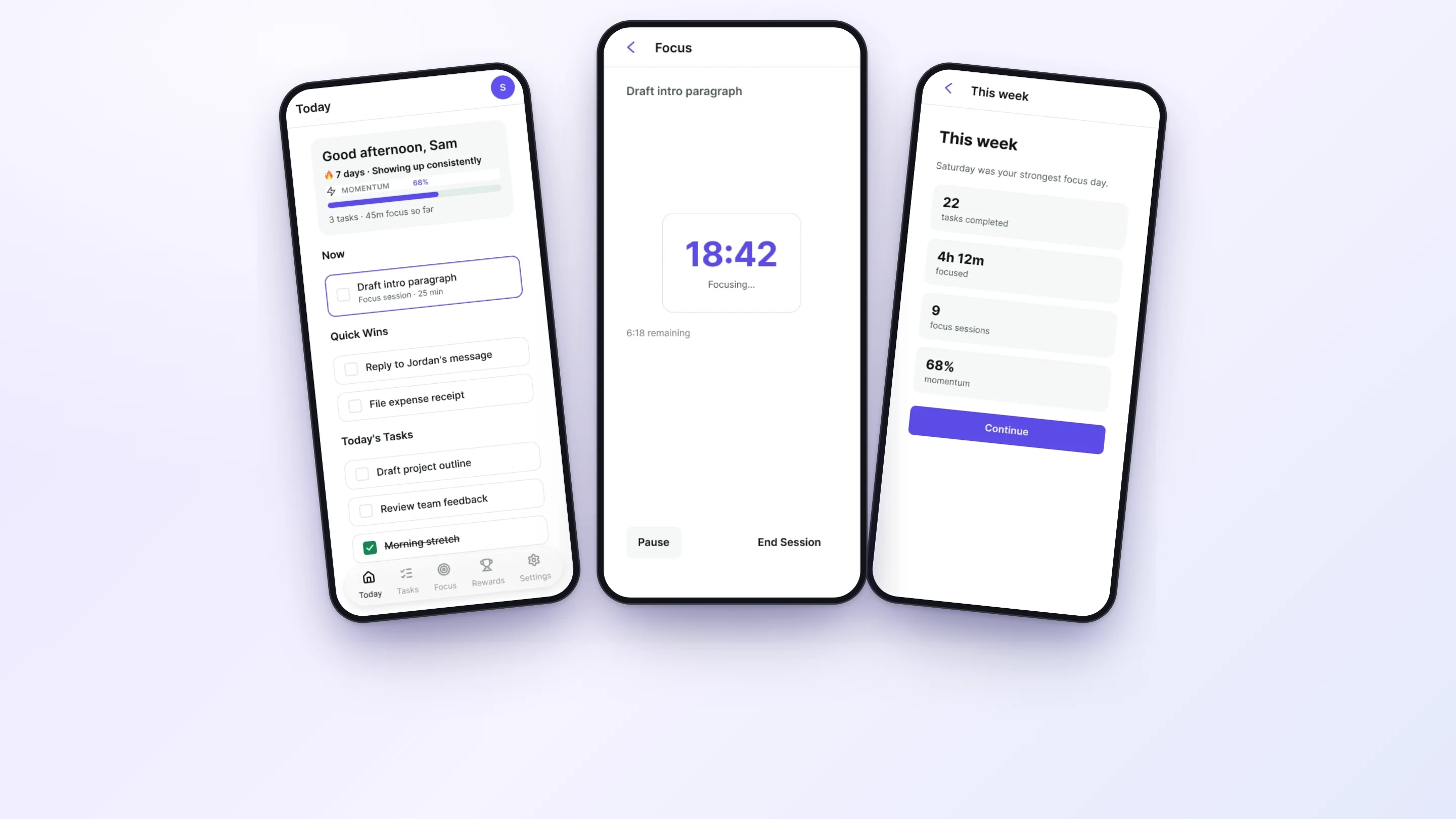
The problem
Most task apps shame ADHD users for missing a day — streaks reset to zero, guilt-tripping copy, and rigid lists that fall apart the moment life gets messy.
The solution
I designed a full token-to-component system around 'momentum, not guilt' — soft consistency tracking, body-doubling, and four sensory modes so the app adapts to the user instead of the other way round.
The research
- Studied ADHD and neurodivergent task-management patterns
- Ran a competitive audit of popular task and habit apps
- Defined personas around energy, focus and overwhelm
- Streak mechanics punish a missed day and push users away
- Rigid lists collapse when plans change
- Sensory overload is a real barrier, so one visual style doesn't fit everyone
Key insight: Momentum beats guilt: the app should adapt to the user instead of the other way round.
Research board
- ~23% — Of adults with ADHD report high levels of internalised stigma (Masuch et al., 2019, cited by Tiimo). (Tiimo, Why productivity systems fail ADHD)
- Planning to starting — Studies cited by Tiimo link ADHD with difficulty planning, organising, initiating and holding tasks in working memory (Ceroni et al., 2022). (Tiimo, Why productivity systems fail ADHD)
- Time blindness — Cited research reports an altered internal sense of time, so time-blocked planners can fail silently (Mette, 2023). (Tiimo, Why productivity systems fail ADHD)
Competitors and inspiration studied
- Tiimo — Visual daily timeline that makes time visible.
- Finch — Gentle, game-like self-care that avoids punishing missed days.
- Goblin Tools — Breaks overwhelming tasks into smaller steps.
- Todoist — Powerful lists for planners; heavy for people who struggle to start.
What it changed in the design
- Replace streaks with soft consistency so a missed day never resets progress
- Offer four sensory modes from one token set
- Add body-doubling and a smart next task to reduce the cost of starting
My process
Research & Personas
Studied ADHD/neurodivergent task-management patterns and competitive analysis before defining the 'Calm Momentum' brand direction.
Tokens & Foundations
Built a 4-theme token system (Standard, Low Sensory, High Contrast, Minimal) so every component adapts without forking.
Components & Wireframes
Designed 18 component sets and 38+ screens, from onboarding through Focus, Rewards, and Body Double flows.
Prototype & Review
Prototyped onboarding, Today, Focus and Body Double flows and reviewed each against the Calm Momentum principles, including all four sensory modes.
Design-to-Code Handoff
A Figma-to-Flutter mapping of tokens and components, with touch-target, motion and contrast rules documented for engineering.
Key design decisions
- Four theme modes from one token set — Standard, Low Sensory, High Contrast and Minimal without forking components.
- Soft consistency instead of streaks — Missing a day never resets progress or shames the user.
- Body-doubling built in — Gives focus sessions a sense of company without social pressure.
The screens
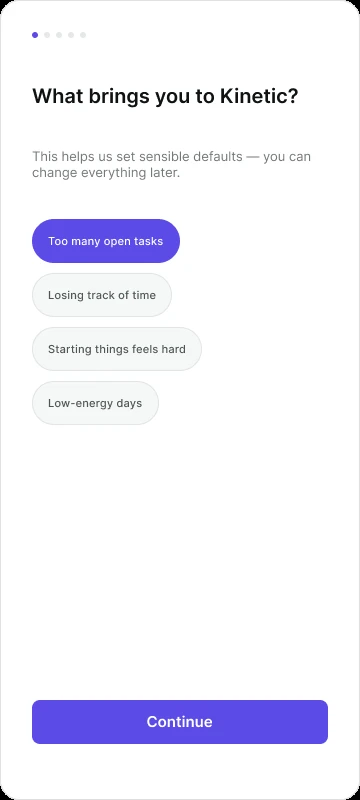 ONBOARDING
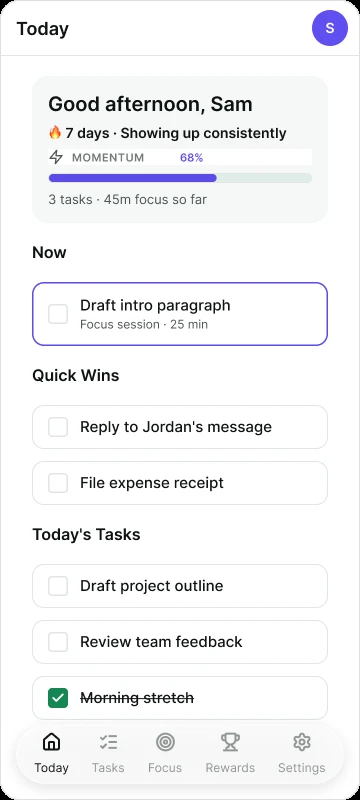 TODAY
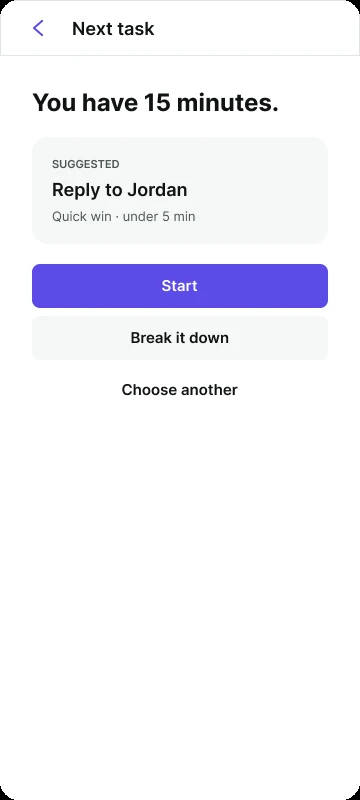 SMART NEXT TASK
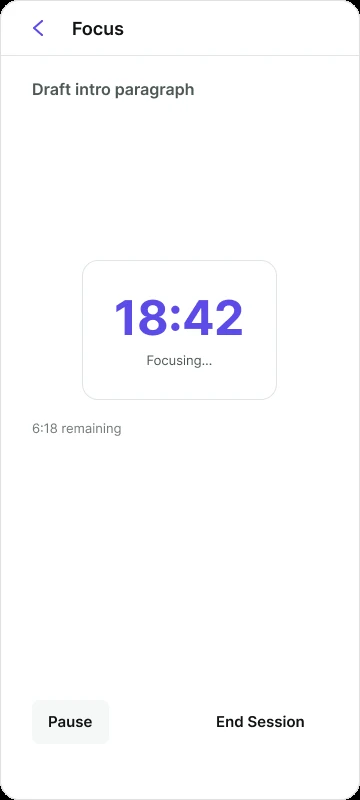 FOCUS · TIMER RUNNING
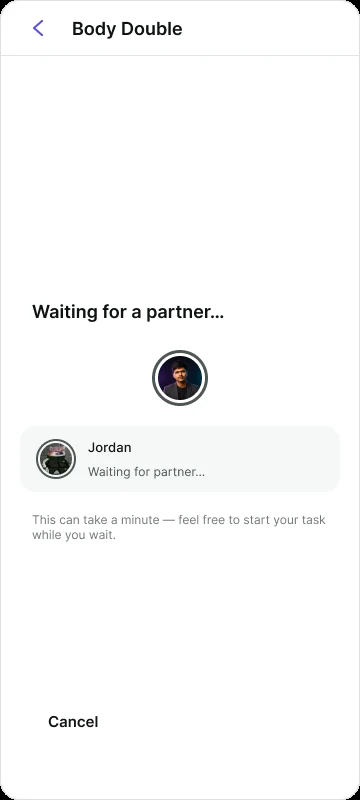 BODY DOUBLE
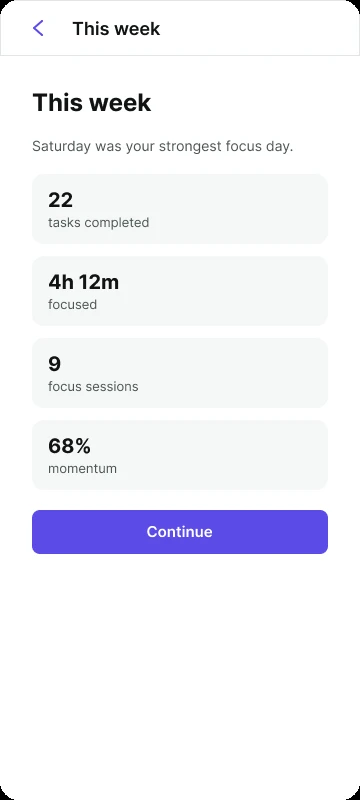 WEEKLY WRAPPED
Results
- 18 — Component Sets Built
- 4 — Sensory Modes Shipped